Government
Define the affected asset or capability, requirement, mission impact and constraints.
 ™
HOW IT WORKS
A shared mission case connects Government decisions and Member contributions across KNOW, DECIDE, EXECUTE and ASSURE. Work can run in parallel, return for correction and continue across organizational handoffs.
CONNECTED MISSION READINESS
Ordimis Symphony is the connected product experience. Mission Readiness Intelligence (MRI) remains the established operating architecture; SYNAPSE supports agentic coordination, and Ask Prime is the conversational entry point.
Vanguard (RIE) establishes readiness context. Compass (MDI) compares responses. Forge (MEE) coordinates approved manufacturing execution. Veritas (QAE) connects qualification requirements and evidence throughout the work.
Covenant (TDRE), Atlas (STEMN), Ascend (WRN) and Sage (EKN) contribute technical-data rights, manufacturing-network context, workforce readiness and engineering knowledge wherever needed. Customers can also begin with an individual product and their existing processes.
Explore each standalone product →WATCH THE FILM · 2:07
See how Government and industry contributions stay connected through one shared mission case.
Press play to watch. Sound, captions and fullscreen are available in the player controls.
Unable to play the video here. Open the video directly or read the transcript below.
A mission can depend on a single part, an aircraft waits, its crew waits. Getting it back takes an enterprise working together. Ordimis begins with a need. Readiness intelligence connects the part to its mission impact, helping government teams focus effort where it matters most. Government and allied partners weigh urgency, constraints, and options. Mission decision intelligence connects their assessments to a shared course of action. The original equipment manufacturer brings the knowledge behind the design. Technical requirements and permitted uses establish a clear foundation for the work. When engineering questions remain, academia brings research, analysis, and testing. The right expertise helps turn uncertainty into an evidence-based path forward. At every hand-off, the requirement, permissions, and responsibilities stay connected. Each team understands what is needed, what is authorized, and what comes next. Industry brings skilled people, equipment, and capacity. Ordimis helps connect those capabilities to the mission need, giving execution a coordinated starting point. Manufacturing execution carries that authorized work into production, connecting the part to its process controls, materials, and the record of how it was made. Qualification and assurance brings the evidence together. Inspection and test results support a traceable assessment against the requirement. The responsible government authority makes the acceptance decision. The evidence is available. The work is traceable. Accountability stays with the people entrusted to decide. The part returns to the warfighter, backed by that connected effort, and the knowledge captured can strengthen the next mission. Ordimis, divide the work, connect the decisions, orchestrate the mission. Know, decide, execute, assure.
AN ILLUSTRATIVE MISSION
A mission-critical component is unavailable. Government needs a viable response; a Member has a potentially relevant manufacturing capability. The example below follows their work together.
Define the affected asset or capability, requirement, mission impact and constraints.
Review the released brief and determine whether your capability could contribute.
RIE establishes the problem; only the released information is available to prospective contributors.
Evaluate alternatives, proposal assumptions, resources and technical requirements.
Propose an approach, schedule, resource needs and a defined delivery endpoint.
MDI structures the decision; EKN, TDRE and workforce information help expose gaps.
Record the selected response and applicable releases, responsibilities and evidence requirements.
Coordinate authorized work, source/process references, personnel, progress and blockers.
MEE and DEN connect execution; STEMN adds production-node context. Additive, traditional and hybrid pathways remain options.
Review submitted maturity claims and accept or return the transition package through the assigned coordinator.
Submit evidence references, scope, remaining findings, limitations and the next-step proposal.
QAE connects assurance evidence. For an illustrative TRL 7-to-9 pathway, the contractor endpoint and Government target remain separate assessments.
Complete the remaining qualification, acceptance and deployment decisions and record the operational outcome.
Support the accepted handoff and retain authorized supporting responsibilities.
A handoff is not product acceptance. Retained knowledge and manufacturing references support a new case only after fresh applicability and approval review.
The current platform demonstrates these workflows with synthetic scenarios and authorized test cases. Demonstration awards and recorded assessments are not procurement actions, verified certifications, or authorization for operational use.
DECISIONS REMAIN DISTINCT
A maturity claim, an assessed TRL, technical qualification, production release and product acceptance answer different questions. None should silently stand in for another.
A supplier may complete its work while installation, training or another blocker remains. The case should show both the completed contribution and the unresolved mission need.
MEASURE WHAT MATTERS
Track time to a decision, readiness of technical references and personnel, work status, open findings and handoff ownership.
Assess time to accepted use and confirmed restoration against a program-specific baseline. Savings and readiness improvements require evidence; synthetic scenarios are not measured operational results.
YOUR NEXT STEP
Explore how a mission need becomes a coordinated case with clear decisions, contributors and evidence.
Explore the Government workspace →Explore relevant opportunities and how your organization can contribute to an authorized mission effort.
Explore the Member workspace →KEEP EXPLORING
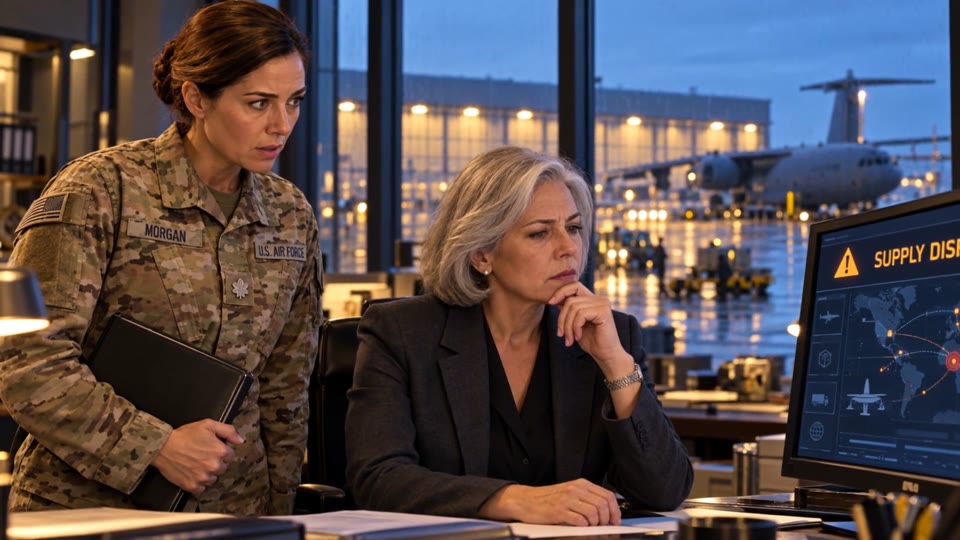 1:35
The Ordimis story
A changed dependency affects more than a schedule. Follow the decisions, responsibilities and evidence that need another look.
Watch film → 4:01
The Ordimis story
Follow the connections between mission need, engineering, manufacturing and the evidence behind responsible decisions.
Watch film →